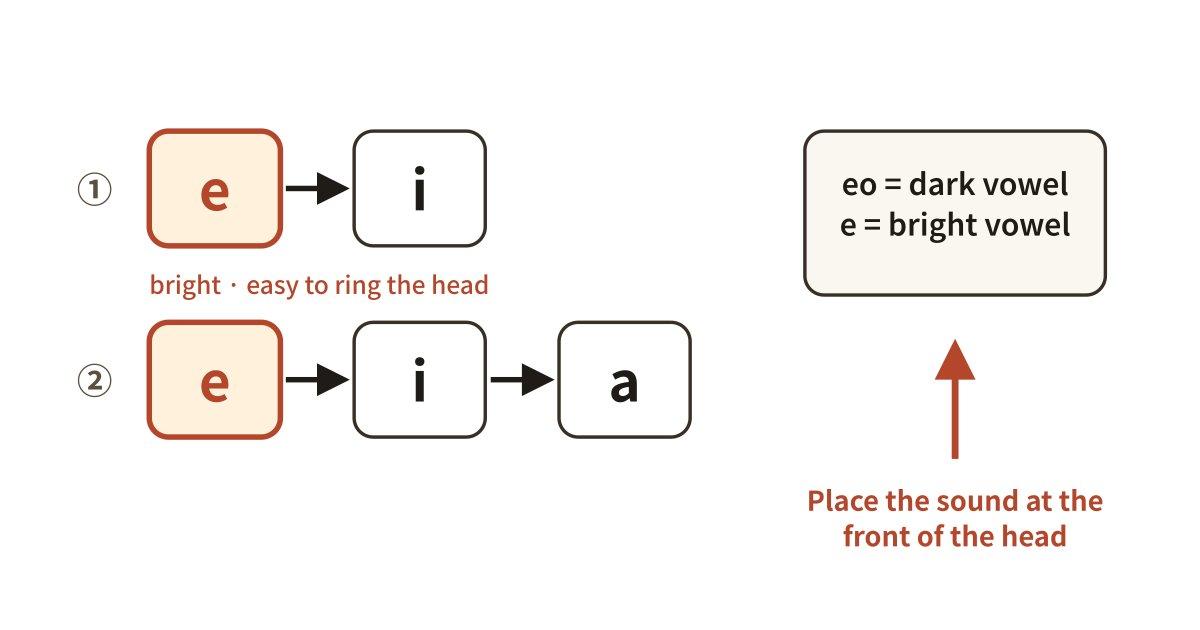
In 2019, Kim Hyuk Gun (김혁건), the vocalist of THE CROSS (더크로스), spelled out in his doctoral dissertation one instruction that often comes up in singing lessons: "Sing in the maschera with a bright pronunciation." It is training, he wrote, in using "e," the vowel that most easily makes the head ring, to resonate the nasal cavity, maxillary sinus and frontal sinus so that the sound comes out bright.
This is the thirteenth part of the series. It sets out head voice, the partner of the chest voice in Part 12.
01.Head Voice: Sound That Resonates the Spaces of the Head
Several passages of the dissertation explain head voice in the same direction.
| Passage in the dissertation | On head voice |
|---|---|
| Resonators (p.93) | The head has many resonating spaces, and resonating the spaces of the head is called head voice |
| Resonance methods (p.163) | Head voice is resonating spaces in the head such as the nose, maxillary sinus and frontal sinus |
| Vocal folds and diaphragm (p.92) | The vocal folds narrow and strong abdominal pressure sends the exhale up high, resonating a higher place among the spaces of the head |
| Range (p.174) | High notes = head voice = falsetto |
Head voice is the resonance of the head's spaces, and what makes that resonance is narrowed vocal folds and supporting breath. In the dissertation's experiment, too, participants who could not use their abdominal muscles practiced resonating in the head on low notes by bringing the vocal folds together (Part 7, section 03).
02."Sing in the Maschera"
Maschera is Italian for "mask." A footnote in the dissertation explains the word as meaning "place the sound at the front of the head and sing, as if wearing a mask." The dissertation writes that singing with the sound placed in the maschera keeps the pitch steady and high.
The dissertation explains the instruction "sing in the maschera with a bright pronunciation" like this: it is training in using "e," the vowel that most easily makes the head ring, to resonate the nasal cavity, maxillary sinus and frontal sinus so that the sound comes out bright, while keeping the idea of placing the sound at the front of the head. Dark pronunciations can also be sung with a bright sound; to do so, you keep practicing joining a dark pronunciation such as "eo" (어) with a bright one to make the sound bright.
03.Six Steps Starting from a Bright "E"
The dissertation sets out the order of practice in six lines.
| Step | The dissertation's explanation |
|---|---|
| a | Sing brightly on "e," a vowel that narrows the mouth and most easily makes the head ring, resonating the nasal cavity, maxillary sinus and frontal sinus |
| b | Once "e" works, try switching the vowel to "i" (e → i) |
| c | Keep the sound placed at the front of the head |
| d | "Eo" is a dark pronunciation, and "e" a relatively bright one |
| e | Join bright and dark pronunciations so that dark pronunciations too can be sung bright (e → i → a) |
| f | Sing in the maschera = place the sound at the front of the head and sing brightly |
If the vowel for lifting the soft palate in Part 12 was "eo," the vowel for finding head voice is "e." A vowel that widens the mouth and a vowel that most easily makes the head ring — the same mouth does two jobs.
04.Head Voice Keeps the Pitch
The dissertation explains head voice together with pitch. To keep the pitch from being inaccurate and going flat while singing, always sing with the feeling of floating the pitch high, and place the sound in the maschera to keep the pitch steady and high. It also writes that head resonance is very important for keeping a steady pitch (Part 10, section 05).
It also sets out how to use head voice. In the high range, the dissertation explains, you learn how to narrow the glottis to resonate the higher head cavity and learn correct breathing, sing with a conscious slow exhale and always keep a high pitch. And it adds that you either lift the soft palate and widen the mouth to use oral resonance, or narrow the glottis to resonate the higher resonating spaces such as the frontal sinus, to produce a high pitch.
05.Singing from the Throat Alone, and Head Voice
The dissertation points out one case common among popular-music vocalists: singing simply from the throat without understanding head voice. And it writes that "you need to understand head-voice technique to find steady pitch and many colors of resonance."
Head voice is not only a technique for high notes. The dissertation writes that it is good to make a habit of keeping head voice even when speaking, without letting the pitch drop (Part 10), and Season 2, Episode 13, "Low Notes," also covers keeping the pitch with head voice on low notes (video description, Part 21).
06.Today's Practice
Turned into points to check while you practice, what the dissertation and the lesson highlight looks like this.
- Ring the front of the head on "e" — Sing brightly on "e," the vowel that most easily makes the head ring, resonating the nasal cavity, maxillary sinus and frontal sinus, and keep the sound placed at the front of the head (section 03 a·c; dissertation p.176).
- E → i — Once "e" works, try switching the vowel to "i" (section 03 b; dissertation p.176).
- E → i → a — Join bright and dark vowels and practice singing the dark vowels brightly too (section 03 e; dissertation p.176).
- Bring the folds together to go higher — Lesson Season 2 Ep. 2 (Head Voice) covers going higher by bringing the vocal folds together, and resonance around the eyes (video description).
The lesson to watch with this part is Season 2, Episode 2, "Head Voice." Its description lists going higher by bringing the vocal folds together, resonance around the eyes, and the back space (Jaw). Practice in making dark vowels bright with the bright vowels "e" and "i" continues in the lesson for Part 14 (Season 1, Episode 8, Connecting Head and Chest Voice).
07.Where to Go Next
Chest voice, the tongue root and soft palate are in Part 12 · Chest Voice, and the ringing of the nose and the path of head voice are in Part 10 · The Nasal Cavity, Sinuses and Using Nasal Resonance. The bel canto training that connects head and chest voice continues in Part 14 · From Bel Canto to Modern Scientific Vocal Technique. The story of a voice that moved across three octaves is in THE CROSS on Sugar Man 3: "Don't Cry" and "For You". Lesson videos are in Korean.
At the front of the head, as if wearing a mask — one bright "e" finds where head voice lives.